
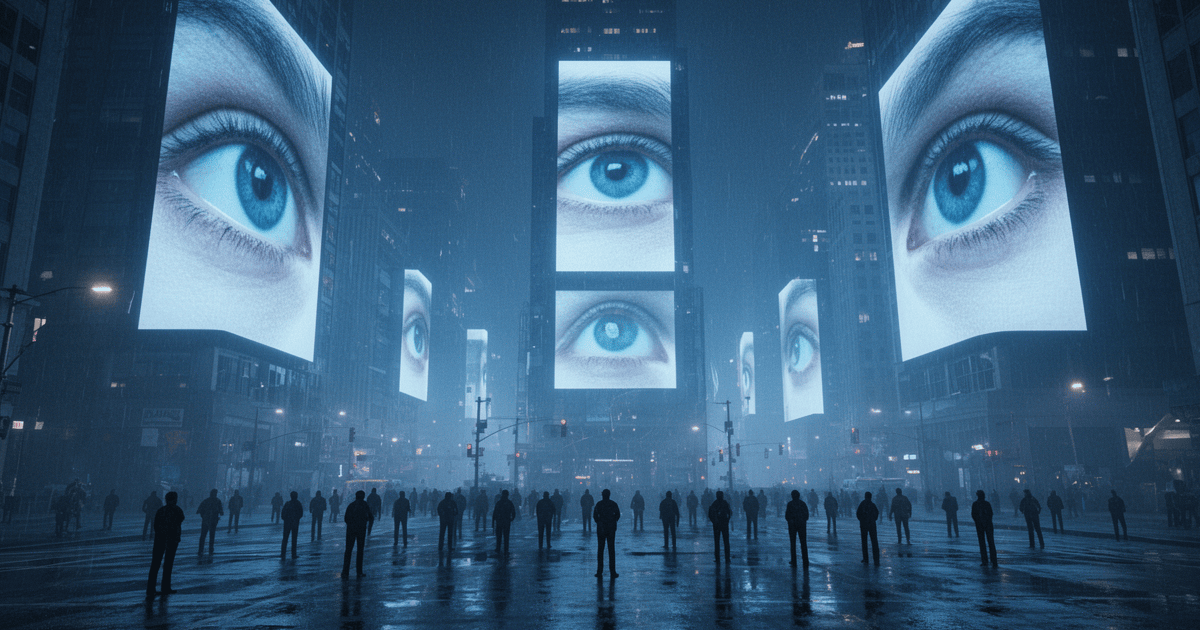
Below is an extract from my upcoming book - "It's Personal..." that I am releasing in light of last week's democratic failure in the European Parliament. I am releasing it in the hopes that it will help others understand why mass surveillance is a bad thing for society and does not help to protect abuse victims and survivors and does not prevent abuse in the first place.
This is, as the title states, deeply personal to me and I hope that by exposing my pain it will empower others to speak out against these dangerous attempts to expand surveillance.
The chapter of the book is called "Psychology".
I can’t remember how young I was when I had my first child psychologist but I was very young. I lived in a crazy situation - my mother had been in an horrendous car accident leaving her in a coma for months and in hospital for the better part of two years.
My stepfather (v1.0) was a violent bastard - and I mean a serious psycho. He would beat my mother and me relentlessly - so when my mother was in hospital I was sent to live with an aunt (first in Newcastle for a short time, then in Liverpool). Those were probably the best years of my childhood - seems crazy to say but it is true.
When my mother recovered we all moved back together (including v1.0) and things went from bad to worse - the violence was beyond imagination. My mother eventually kicked him out but it didn’t end - my sister was kidnapped from school, people would come to the house in the middle of the night rattling the doors, throwing things at the windows etc. - we were terrorised.
One day we returned home after visiting an aunt and the house was open, he had been there and broken in, I remember we were all very scared. Another time, our dog was stolen (Mitsy) and we never saw her again - we knew who was responsible.
Eventually Social Services got involved and that is when I had my first child psychologist. In the late 70s and early 80s the UK went through a phase where if you so much as scraped your knee Social Services came knocking - they were useless but they came knocking.
That was pretty much my life from that point forward - being questioned by the psychologist every couple of weeks whilst serving as a punching bag for v1.0 and the new v2.0 (my mother had a knack of falling for drunks).
So psychology was a part of my life from an early age - it was psychology that had me sent to boarding school and even there we had our own psychologist - Dr Phillips was his name if I recall correctly.
Of course the psychologists never stopped the physical or sexual abuse - but they were there all the same.
Ironically, in the summer of 1992 - just two years after I had been forced to leave school - I applied to join the army. I took all the tests and had the highest results ever for the North West of England - they wanted me to go to Sandhurst and train to be an officer after which I would serve in the Special Intelligence Corps as a Signals Analyst.
This is something I have never discussed really - you see, back then, the Special Intelligence Corps were the Army’s signals intelligence agency. I look back now and I have to have a chuckle - I almost became part of one of the very institutions I would be fighting against decades later. Fortunately for me a psychologist stepped in and said I wasn’t stable enough - they were almost definitely correct.
Then in college I studied psychology as a means of introspection - I was good at it, it made sense, so I continued to study it in my first degree along with Computer Science as a double major.
Now, my life is dominated with psychology because the war we are fighting now is a psychological war. Corporations and Nation States are utilising psychological warfare to achieve their own goals - and every single one of us is their target.
I recall studying the Hawthorne Effect (and similar phenomena) at University during my experimental psychology modules - for those of you not familiar with the Hawthorne Effect, it is the phenomenon which exists when people know they are being observed - first observed by Elton Mayo. He noted that in the case of workers' productivity - there seemed to be an increase when the workers understood that they were part of an experiment - that they were being observed.
This effect and variations of it can be something of a problem when it comes to experimental psychology because it is difficult to determine whether or not the behaviour of the participants is a natural reaction to the tested theory or the result (at least in part) of knowing they were being observed. There are plenty of scholarly critics of the Hawthorne Effect and several similar phenomena which are considered more repeatable - but either way it is widely understood in the social sciences and experimental psychology that knowledge of observation can be seen to change behaviour with significant effect.
When we consider this in real world examples instead of laboratory experiments it becomes even more obvious. For example - I expect many of my readers will slow their car down when they know they are approaching a traffic camera. This is not necessarily because they respect the speed limit (if they did then they would not have been speeding in the first place) but because they know they are about to be observed and there are potential consequences to that (such as receiving a speeding ticket).
The same is true of Closed Circuit Television Cameras (CCTV) which are often deployed in an attempt to reduce crime. What most people don’t know is that it is very rare that video footage from the cameras is actually used to secure a conviction.
A study in Scotland discovered that CCTV usage across the region only resulted in a 14% arrest rate and officials admitted that they had no official numbers on how many of those arrests actually ended with a conviction.
Yet still we deploy CCTV systems in public spaces with the hopes that it will deter antisocial or criminal activity. We are, in effect, hoping that people will change their behaviour because they know they are being observed.
If we consider a more extreme example - would the reader expect a prison to have no guards? If you consider the guard to prisoner ratio in a typical prison it is hard to believe that in the case of a riot or an organised attempt to overpower the guards, that the guards would stand a chance. But the guards are not intended to be a physical deterrent for such situations - in fact in most cases of riot or an organised attack the guards are moved out of the environment and it is locked down. The presence of the guards is a psychological deterrent - it is hoped that if the prisoners know they are being observed they will behave in a certain way.
There are countless examples similar to these which we encounter every single day in our normal lives. Security guards in public spaces, the Police, CCTV, traffic cameras, traffic wardens, teachers in the school yard, sports referees etc. are all examples of this type of psychological control.
The common factor here is that in all of the situations above the observer is in a position to leverage consequences for the actions of the observed. In the case of a traffic camera - a ticket; in the case of a sports referee a penalty etc.
We should also consider other environments where the observer is not seen as authoritarian but simply a peer. In these situations we might see the opposite effect, incidents of dissidence. For example - a bully in the school yard is rarely alone and often uses their peers as a form of reinforcement for their actions - the same is true of Internet “trolls”; in both of these examples the subject often behaves very differently when an authority figure is introduced into the environment - further reinforcing the underlying theory of phenomena such as the Hawthorne Effect.
We see similar concepts in popular culture; George Orwell’s “Big Brother” from 1984 and Black Mirror’s “Nosedive” for example.
Many would argue that such techniques serve to improve behaviour and should not be considered as harmful. If traffic cameras cause people to reduce their speed then surely this is a good thing; if CCTV acts as a deterrent for antisocial or criminal behaviour - that is also a good thing?
But what if it isn’t?
If you consider how many people are raped or murdered in their home globally every single year, surely it makes sense to have cameras everywhere? I mean - think about the children right? If we can change the behaviour of paedophiles by having a ubiquitous network of surveillance cameras everywhere, then we should surely consider deploying such a solution?
If we can prevent terrorism by listening to every phone call and reading every email, then we should do that too right?
There are some who agree and in fact as a privacy advocate I see these arguments on an almost daily basis.
I grew up in a home destroyed through physical and sexual violence; I went to a school where physical and sexual violence was almost considered as part of the curriculum. One might expect that as a survivor of such abuse I would support any measure which would prevent other children being subjected to the same atrocities.
But consider this.
We know that people change their behaviour when they know they are being observed. How many of those children would seek help if they knew the communications were not secure? Also, again as a result of knowing they are being observed, how many paedophiles would change their behaviour in ways which makes it even more difficult to detect?
We see examples of this already where child pornography traffickers move to encryption and steganography to distribute their images and host their communications. We see the same with terrorist communications as well.
So whereas it might work for a very limited time - it will not solve the problems of terrorism or sexual violence.
I recall in 1997 I was writing a paper on the issue of child pornography online - it was for my psychology dissertation. Halfway through the paper I became incredibly depressed and angry. I sought the counsel of my professor and he asked me a question, he said:
“If you saw a baby drowning in the river, what would you do?”
Obviously I answered as I presume many others would - I would jump in and try to save the baby. So my professor asked:
“OK so you saved that baby and you continue walking up the river - you see another baby drowning, what do you do?”
I replied I would jump in and attempt to save that baby as well.
“Now imagine that the babies keep coming - every 5 steps you take you see another baby - you save as many as you can but you become tired, you can’t muster the strength to save any more and yet they come and they come.”
I got frustrated and barked at my professor that it was an unfair scenario with no answer.
He smiled warmly and said to me:
“Do you not think it would be wise to find out why so many babies are ending up in the river in the first place? This means some babies will drown, that is impossible to avoid, but if you find the cause you can look for a solution which prevents many more babies ending up in the river in the future.”
I feel incredibly lucky to have known such people as this professor and the old veteran from the previous chapter. Their wisdom is a real privilege to have experienced.
No matter what we do as a society in an attempt to deal with the consequences of the actions of others - such as terrorism, sexual violence etc. they will never end until we seek solutions to the cause rather than simply trying to mitigate the consequences.
Placing cameras everywhere will not prevent sexual violence - studying why people commit sexually violent acts and finding a solution will prevent sexual violence, nothing else will no matter how many millions of euros are spent lobbying and creating bad policy.
Listening to every phone call and reading every email will not end terrorism - studying what drives people to commit acts of terrorism and finding a solution to that, will end terrorism (or at least have a far greater impact on reducing it than the alternative).
But more than that - we have to consider the consequences of these short-sighted alternatives. If we listen to every phone call, if we read every email, if we have absolute surveillance - we are not just impacting those who would choose to do harm - we impact everyone.
The right to private communications is a fundamental human right, the right not to be surveilled indiscriminately is also a fundamental human right (the same right in fact) and for good reason.
I have talked about the Hawthorne Effect and the impact it has in theory as well as examples in popular culture which are often considered as warnings of how we should not evolve as a society. But this isn’t just theory and story telling - this is real and happening every single day.
In China, they have a system called Social Credit which is best described as China’s “hold my beer” moment to Black Mirror’s Nosedive. It is a system of complete and total surveillance - not just by the State but by citizens themselves.
The entire purpose of the social credit experiment (and I use the word experiment very loosely indeed) is mass social control. It is an attempt by the Chinese government to implement the Hawthorne Effect at the national level - and it horrifies me to say it, but it is working exactly as intended.
To quote a leaked Chinese government document from 2014 the purpose of the social credit system is to:
“allow the trustworthy to roam everywhere under heaven while making it hard for the discredited to take a single step.”
And in 2018 it has been reported that 23 million people have been banned from travel as a result of not having a high enough personal score - with the Chinese Courts banning 17.5 million flight ticket purchases and 5.5 million train ticket purchases.
To quote The Guardian newspaper:
“Social credit offences range from not paying individual taxes or fines to spreading false information and taking drugs. More minor violations include using expired tickets, smoking on a train or not walking a dog on a leash.”
I trust that none of my readers think this is a sensible way to run a society?
You see the problem is, as has been illustrated up to this point, total surveillance leads to a situation where people are no longer free. It leads to a complete collapse of self-identity and individuality.
As a faculty member at Singularity University, I deliver around twelve speeches on data ethics a year and this is one of the points I endeavour to relay to my audience.
As citizens in a democratic society, we live in a world where certain rights and freedoms are guaranteed - we often refer to them as human rights or fundamental rights.
These rights include things like:
- Freedom of Speech
- Freedom of Movement
- Freedom of Association
- Freedom of Religion
- Freedom of Political Affiliation
- Freedom of Thought
- etc.
All of these freedoms make us who we are - these guarantees are the bedrock of a democratic society.
Without freedom of speech, one would not be able to speak out against something they don’t agree with; laws would remain static, political opposition would stagnate; and ideas would not be shared if they were considered disruptive or dissonant.
Without freedom of movement we would not be able to attend rallies or protests; we would be restricted in the culture and arts we are able to experience or whom we can build relationships with.
Similarly without freedom of association we would not be able to join groups which those in power considered to be a threat - even if that threat was nothing more than a threat to the status quo.
All of these freedoms are fundamental in determining our role in the world. The relationships we build, the places we live, the thoughts and ideas we share. Our sexuality, our identity - our self.
Under the Chinese Social Credit system - none of these freedoms exist and those who live under this regime are not a free people. Everything they do is based on what the State considers is good and if they do something different the consequences are exclusion and punishment.
We cannot allow democracy to be usurped by such an authoritarian system.
Can you imagine how physics and science would have developed if Nicolaus Copernicus didn’t develop his model of the universe? He was considered a heretic by the Church in a time where the Church had immense power - yet despite the risks he continued his work and published his model and is now regarded as one of the most important figures in the history of science.
In a world where Freedom of Speech, Association, Thought etc. does not exist - we might never have another Nicolaus Copernicus.
These freedoms are not just essential for democracy and the self - the loss of such freedoms would have a profound effect on the development of society itself. Innovation, politics, art, science and every aspect of our lives would likely be very different without these fundamental freedoms.
If we lose these freedoms we are no longer individuals - we are simply automatons mimicking life.
The concept of “nothing to hide, nothing to fear” pales to insignificance when considered against these risks; the very solutions to the problems which total surveillance claims to mitigate, might never be found if we do not have the freedom to look for them.
Furthermore, when we use the crimes against others as an excuse to remove these freedoms, we are creating more harm to those very victims we seek to help.
As a survivor of sexual and physical abuse, my rights were already ripped away from me as a child. My body was beaten and abused and the long consequences of that are to this day still manifesting.
So why then must I be further abused, be subjected to the violence of surveillance and control? Do not do these things in my name, do not do these things in the names of others who were made to suffer the same - how dare you!
Allow us the sanctuary of the few rights we have left. Allow us the opportunities of freedom, self-identity and individuality. Allow us the dignity of the self.
And what of tomorrow - what of future generations? Will our descendants even know what free thought is, or will surveillance be so ubiquitous and the consequences of it be so absolute as to deny the rights of our grandchildren and their grandchildren to be free people?
What will history books in 2500 AD tell of these times? Will they celebrate the age of enlightenment and abundance or will they speak of war and despair?